
ROBOTIC SPINE SURGERY
ADVANCED PRECISION FOR SPINE CARE
ADVANCED ROBOTIC SPINE SURGERY in San Antonio
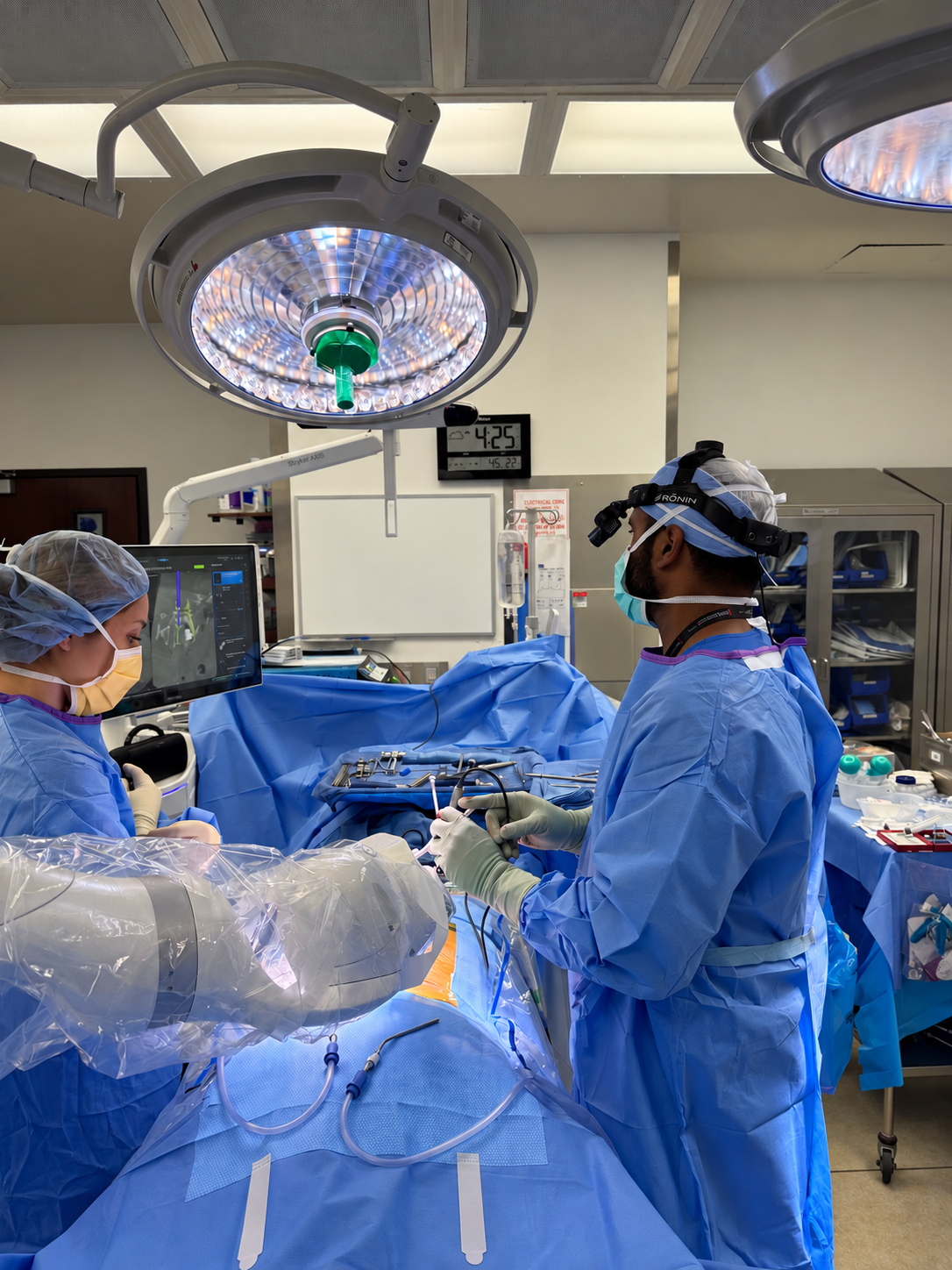
Robotic spine surgery combines advanced imaging, surgical planning, and real-time guidance to help Dr. Gautham Prabhakar perform select spine procedures with a high level of precision. The technology can assist with the placement of spinal instrumentation while allowing the surgical approach to be planned around each patient’s unique anatomy. Dr. Prabhakar remains in control throughout the procedure, using robotic guidance as an additional tool to support accurate, personalized spine care.
WHAT IS ROBOTIC SPINE SURGERY?
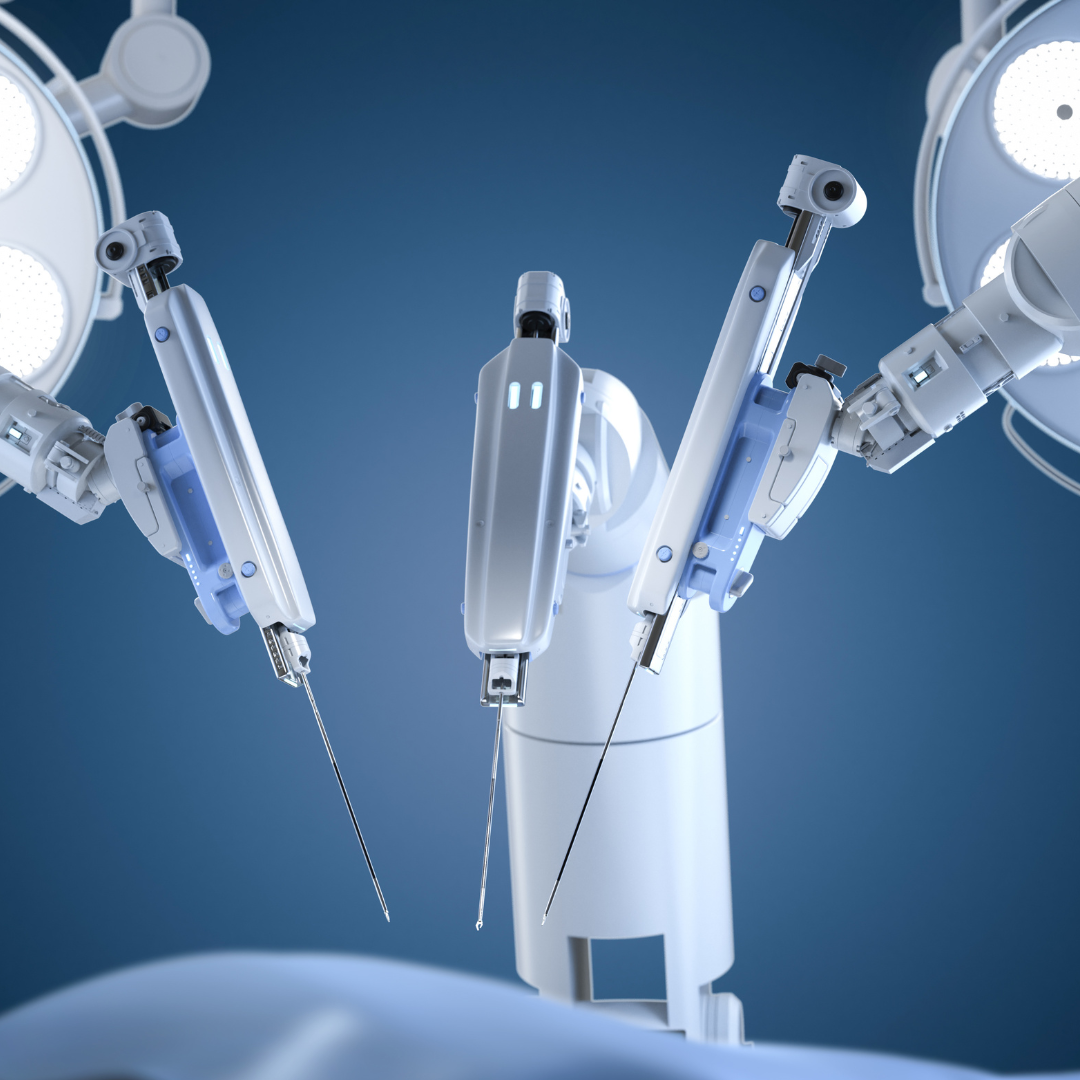
Robotic spine surgery combines advanced imaging, surgical planning software, and robotic guidance to assist the surgeon during certain spine procedures. The technology helps Dr. Prabhakar plan the procedure around each patient’s anatomy and follow that plan in the operating room.
During surgery, the robotic system can help guide the position and trajectory of surgical instruments with a high degree of precision. This can be especially useful when placing screws or other implants in areas where accuracy is important.
The robot does not perform the surgery on its own. Dr. Prabhakar remains in control throughout the procedure and uses the technology as an additional tool to support surgical planning and execution.
How Robotic Spine Surgery Works
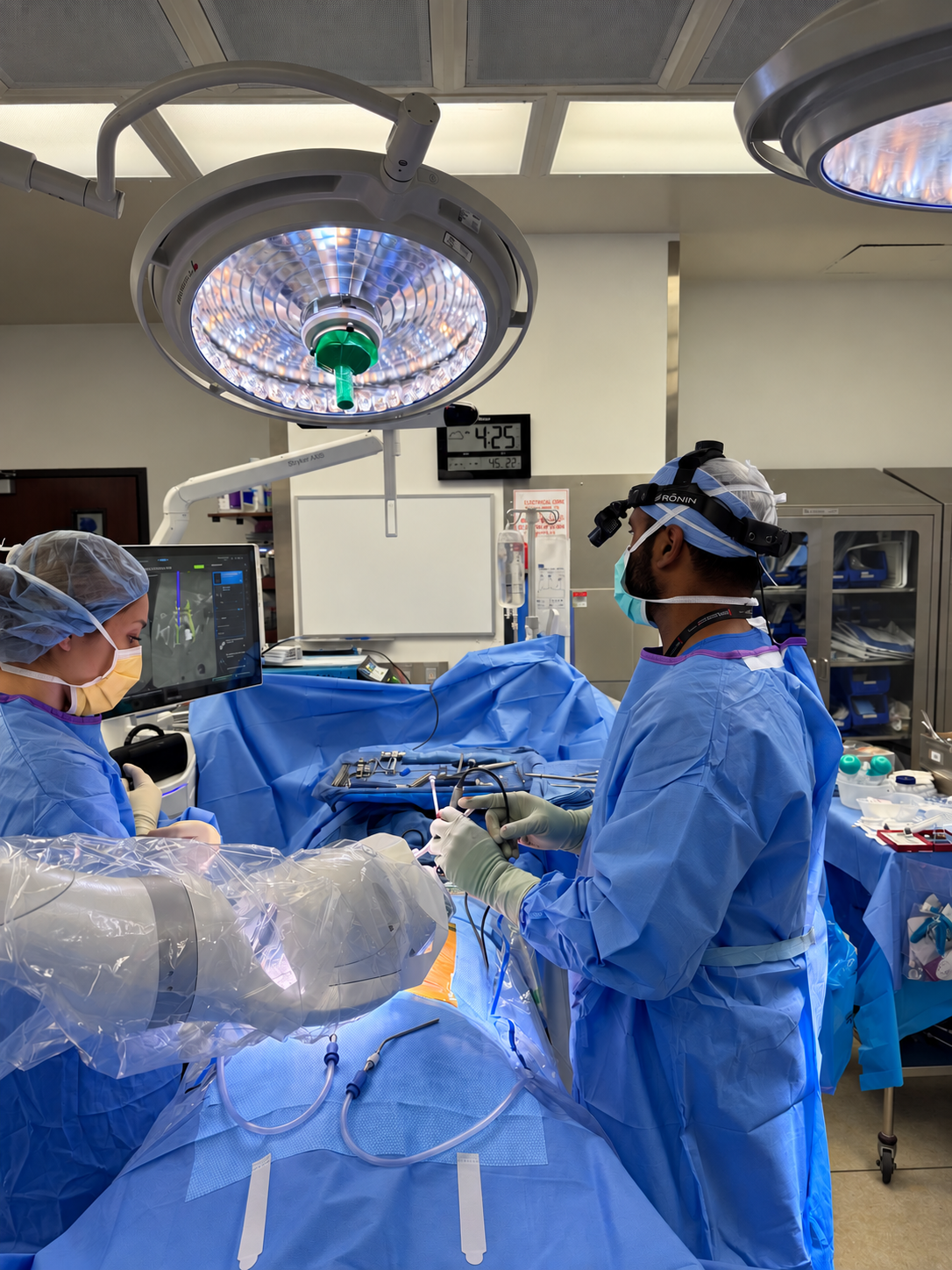
Robotic spine surgery combines advanced imaging, detailed planning, and real-time guidance to support precision during select procedures. Dr. Prabhakar remains in control throughout the surgery, using the robotic system as an additional tool to help carry out the surgical plan.
-
STEP ONE: SURGICAL PLANNING
Detailed imaging is used to map the anatomy of your spine and create a personalized surgical plan based on the exact area being treated and the position of surrounding structures.
-
STEP TWO: ROBOTIC GUIDANCE
During surgery, the robotic system helps guide instruments along the planned path and supports accurate positioning of screws or other spinal hardware.
-
STEP THREE: SURGEON CONTROL
Dr. Prabhakar performs the procedure while using robotic guidance to follow the surgical plan, monitor positioning, and make adjustments when needed.
CONDITIONS THAT MAY BE TREATED WITH ROBOTIC SPINE SURGERY
Robotic guidance may be used during select spine procedures that require precise planning and placement of spinal instrumentation. Dr. Prabhakar considers the diagnosis, spinal anatomy, surgical goals, and complexity of the procedure before determining whether robotic assistance may be beneficial.
Degenerative Disc Disease: Advanced degeneration may require stabilization or fusion when symptoms do not improve with conservative treatment.
Spondylolisthesis: A slipped vertebra may require stabilization to restore alignment and reduce nerve compression.
Spinal Stenosis: Severe narrowing of the spinal canal may require decompression combined with stabilization in some patients.
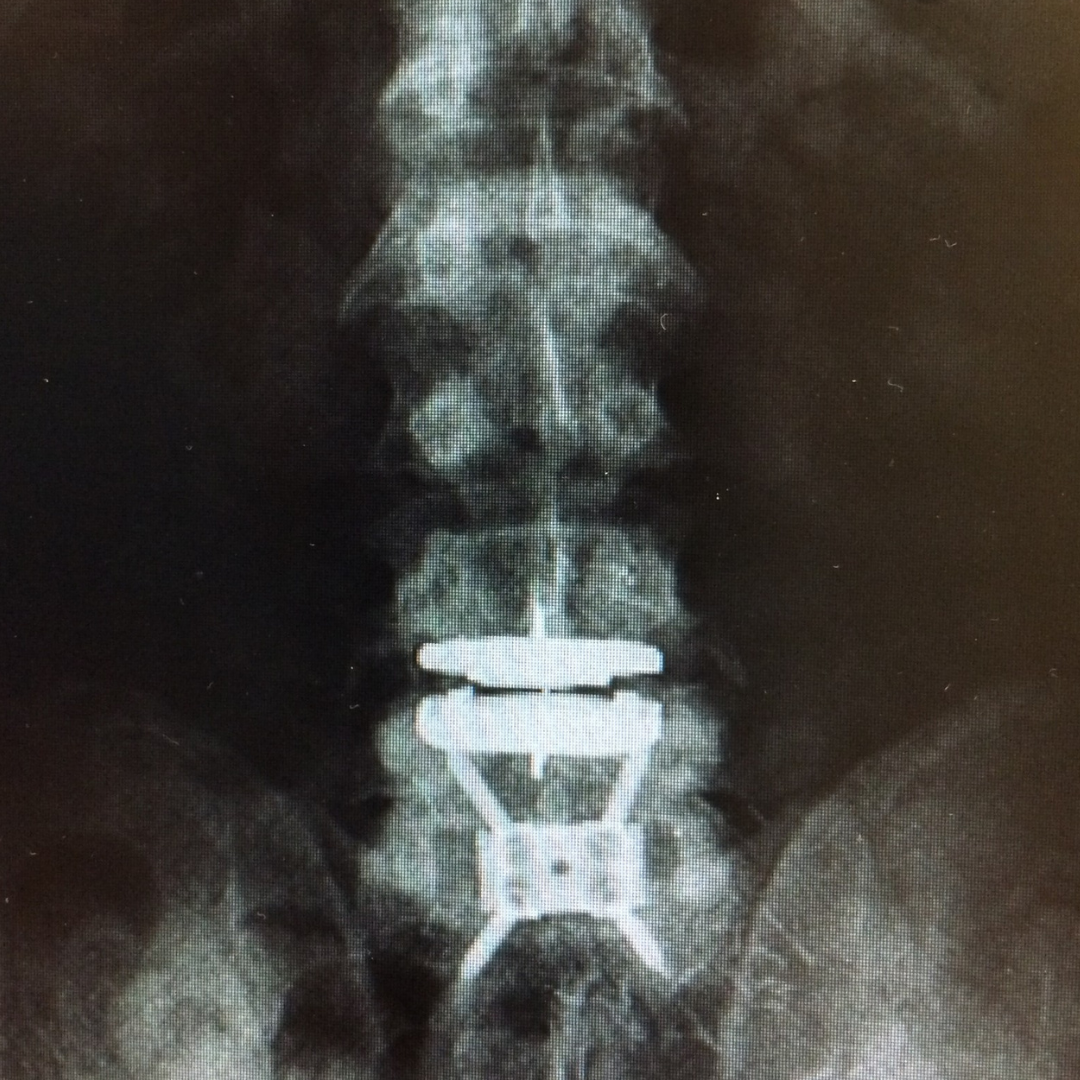
Spinal Instability: Excessive movement between vertebrae may require fusion and precise placement of spinal instrumentation.
Spinal Deformity: Certain cases of scoliosis or abnormal spinal alignment may benefit from detailed surgical planning and guidance.
Revision Spine Surgery: Robotic guidance may assist when previous surgery or existing hardware makes the anatomy more complex.









Benefits of An Robotic Spine Surgery
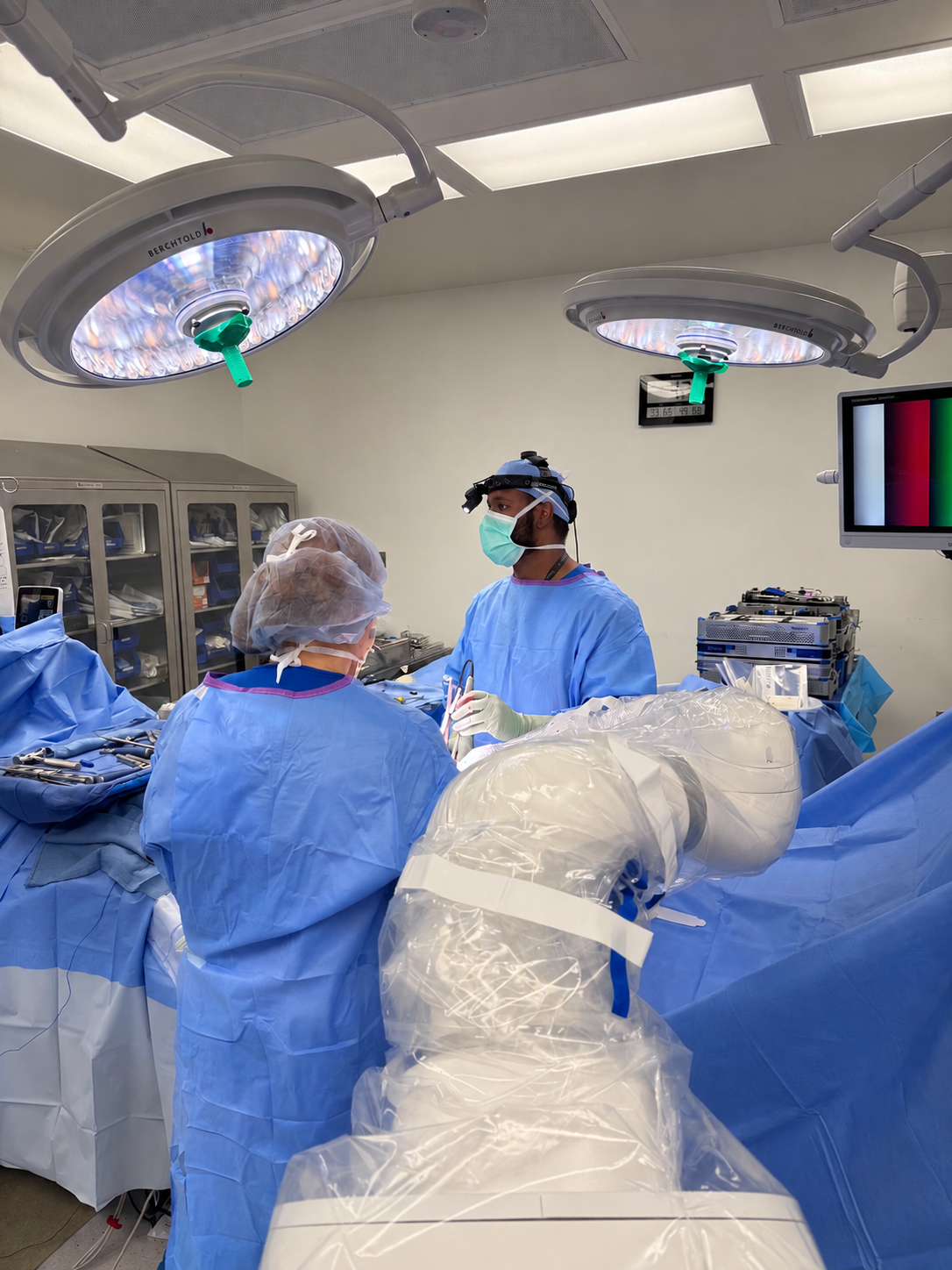
Robotic spine surgery combines advanced planning and real-time guidance to support precision during select procedures. For appropriate patients, the technology can provide several advantages throughout the surgical process.
-
PRECISE IMPLANT PLACEMENT
Robotic guidance can help support accurate positioning of screws and other spinal instrumentation.
-
REAL-TIME SURGICAL GUIDANCE
Advanced navigation helps Dr. Prabhakar follow the planned trajectory throughout the procedure.
-
SUPPORT FOR COMPLEX CASES
Robotic guidance may be especially helpful when anatomy, prior surgery, or reconstruction makes a procedure more complex.
-
MINIMALLY INVASIVE COMPATIBILITY
Robotic technology can be combined with minimally invasive techniques when appropriate for the procedure.
-
PERSONALIZED SURGICAL PLANNING
Detailed imaging allows the procedure to be planned around the patient’s individual spinal anatomy.
-
SURGEON-CONTROLLED TECHNOLOGY
Dr. Prabhakar remains in control throughout surgery while using the robotic system as an additional guidance tool.
WHO IS A CANDIDATE FOR ROBOTIC SPINE SURGERY?
Robotic spine surgery may be appropriate for patients who need a procedure involving precise spinal instrumentation or stabilization. Dr. Prabhakar evaluates your diagnosis, imaging, spinal anatomy, previous treatment, and overall surgical needs before determining whether robotic guidance may be beneficial.
You may be a candidate for robotic spine surgery if you have:
Spinal instability that may require fusion
Spondylolisthesis or degenerative spine changes
Spinal stenosis requiring stabilization
A condition requiring precise screw or implant placement
Previous spine surgery requiring revision
Complex anatomy that may benefit from advanced surgical planning

Frequently Asked Questions about ROBOTIC SPINE SURGERY
-
No. Dr. Prabhakar remains in control throughout the procedure. The robotic system serves as a guidance tool that helps with surgical planning and the positioning of instruments or implants.
-
Robotic guidance may be used during select procedures that involve spinal instrumentation, including certain spinal fusion, minimally invasive, revision, and complex spine procedures.
-
Robotic guidance can help support precise surgical planning and implant placement based on your individual spinal anatomy. The potential benefits depend on the procedure being performed.
-
It depends on your diagnosis, anatomy, symptoms, imaging, and the type of surgery you may need. Dr. Prabhakar will determine whether robotic assistance is appropriate for your specific procedure.
-
Recovery depends primarily on the type and extent of surgery performed. When robotic guidance is combined with a minimally invasive approach, some patients may have a less disruptive surgical experience, but recovery varies from person to person.
-
Robotic systems are designed to assist surgeons with planning and guidance, but every spine procedure carries risks. Dr. Prabhakar will review the benefits, risks, and alternatives based on your individual condition.
-
No. Robotic surgery refers to the technology used to assist with planning and guidance. Minimally invasive surgery refers to the surgical approach. In some cases, the two can be used together.

COULD ROBOTIC SPINE SURGERY BE RIGHT FOR YOU?
Talk with Dr. Prabhakar about your diagnosis, symptoms, and surgical needs to determine whether robotic guidance may be appropriate for your spine procedure.