

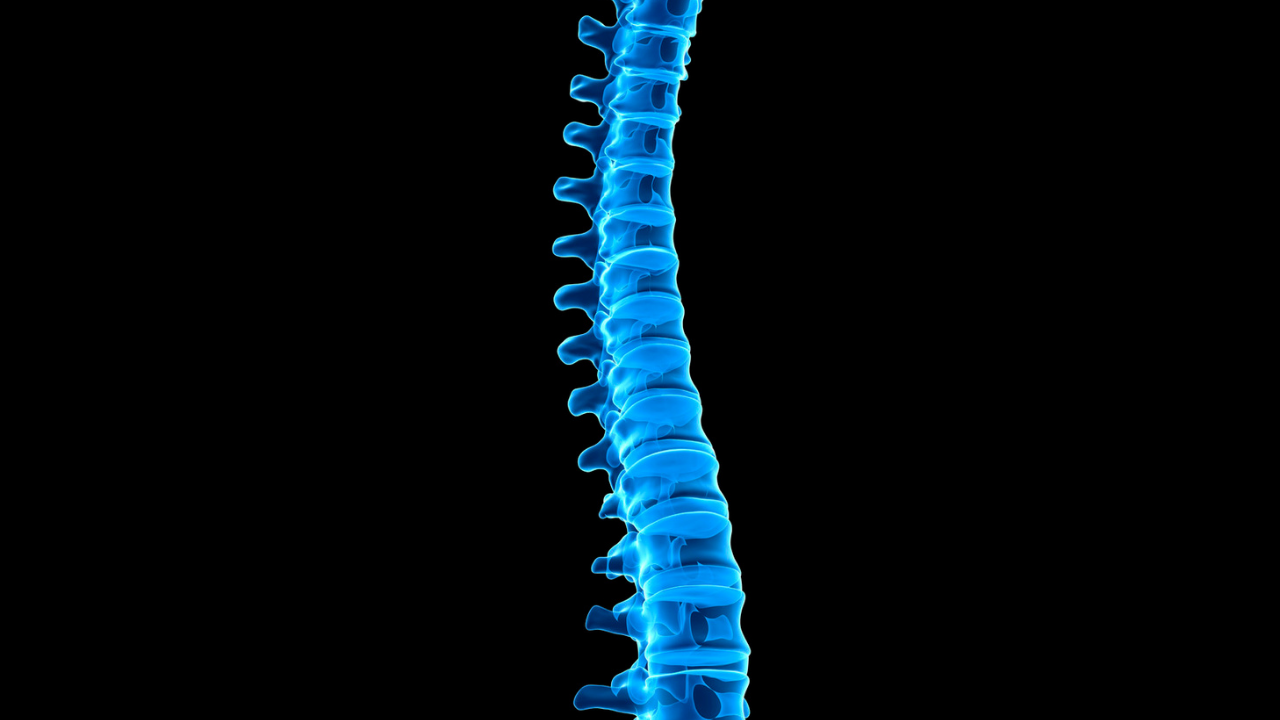
ENDOSCOPIC SPINE SURGERY
PRECISION THROUGH A SMALLER APPROACH
Precision-Focused Endoscopic Spine Surgery in San Antonio
For select patients with a herniated disc, spinal stenosis, or nerve compression, endoscopic spine surgery offers a highly targeted approach through a very small incision. Dr. Gautham Prabhakar uses an endoscope and specialized instruments to access the affected area while limiting disruption to surrounding muscles and tissue. The goal is to relieve pressure on the nerves, address the source of symptoms, and support a smoother recovery with less surgical disruption.
What Is Endoscopic Spine Surgery?
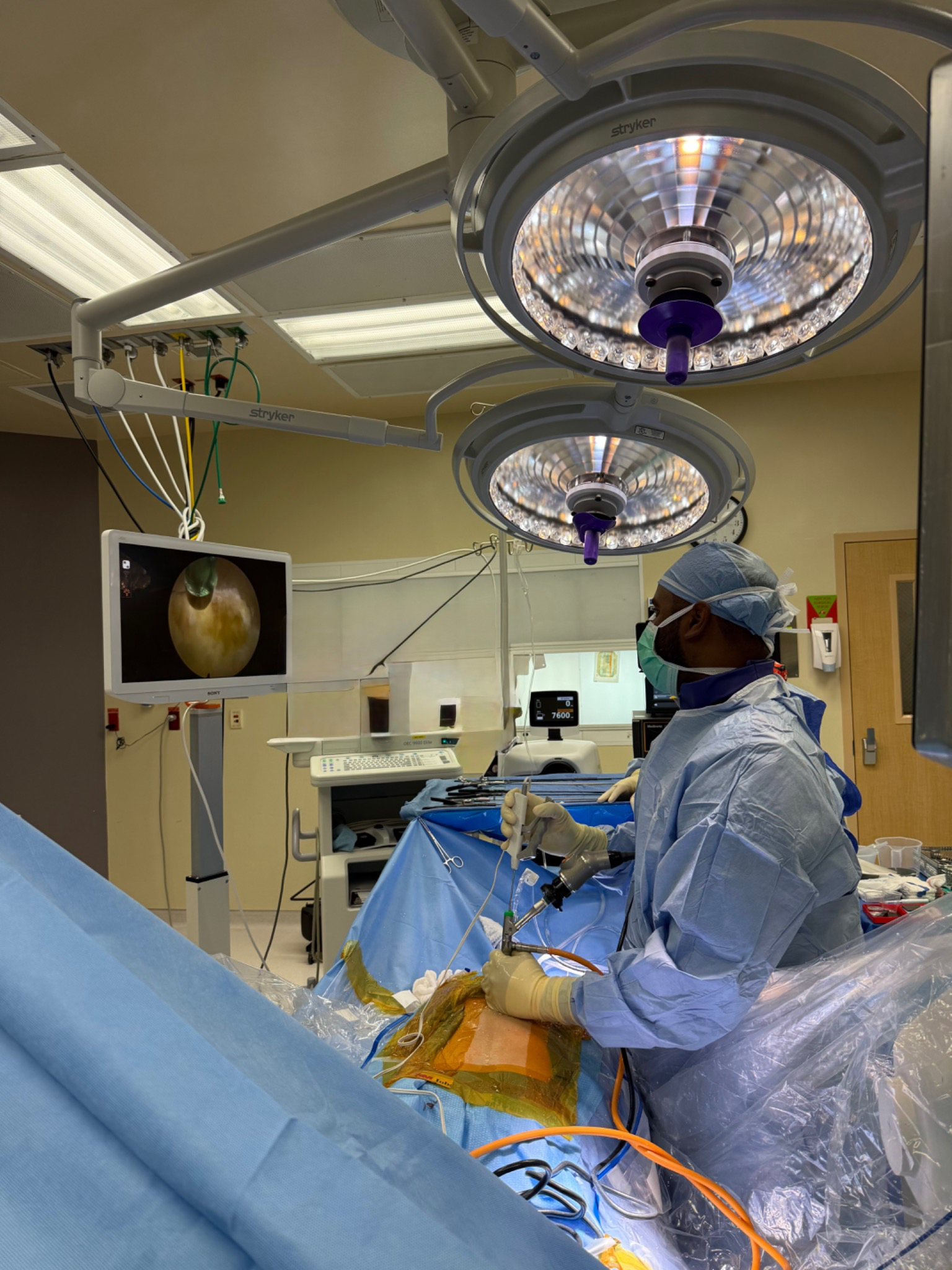
Endoscopic spine surgery uses a small camera, called an endoscope, that passes through a narrow working channel to reach the spine. Dr. Prabhakar performs the procedure while viewing a high-definition image of the surgical area on a monitor.
The endoscope contains its own light source and camera, allowing the surgeon to see the anatomy without widely opening the surrounding tissues. Specialized instruments pass through the working channel, and irrigation may be used to help maintain a clear surgical view.
Endoscopic spine surgery is one of the least disruptive approaches within minimally invasive spine surgery. The incision is typically very small and may require only a single stitch or adhesive closure, often leaving a much smaller scar than traditional open surgery.

Endoscopic Procedures Dr. Prabhakar Performs
Most endoscopic spine surgery falls into a small number of well established procedures, performed in the lumbar spine and in select cervical cases.
-
Endoscopic Discectomy
Removal of herniated disc material that is pressing on a nerve, helping relieve pain, numbness, or weakness.
-
Endoscopic Foraminotomy
Widening the opening where a spinal nerve exits to relieve pressure caused by bone, disc material, or thickened tissue
-
Endoscopic Laminotomy
Removal of a small portion of bone or ligament to create more space around compressed nerves and help relieve pressure on the affected area.
-
Endoscopic Rhizotomy
Treatment of small nerve branches that carry pain signals from the facet joints in select patients with chronic back pain.
-
Revision Discectomy
Treatment of a recurrent disc herniation after previous surgery using a focused endoscopic approach when appropriate.
-
Endoscopic Cyst Removal
Removal of certain cysts or free disc fragments that are pressing on a nerve and can be safely reached endoscopically.
Conditions That May Be Treated Endoscopically
Endoscopic spine surgery may be used when pain or nerve symptoms can be traced to a specific area of compression. Dr. Prabhakar evaluates the condition, location, imaging, and symptoms to determine whether an endoscopic approach may be appropriate.
Herniated Disc: Disc material can press on a nearby nerve, causing pain, numbness, tingling, or weakness.
Spinal Stenosis: Narrowing around the spinal nerves can cause pain, weakness, or difficulty walking.
Foraminal Stenosis: Narrowing where a nerve exits the spine can lead to radiating pain, numbness, or weakness.
Sciatica: Compression of a nerve in the lower back can cause pain that travels into the buttock or leg.
Lumbar Radiculopathy: An irritated or compressed nerve may cause pain, tingling, or weakness that extends into the leg.
Recurrent Disc Herniation: A disc may herniate again after previous treatment, causing renewed nerve-related symptoms.








How Minimally Invasive Is Endoscopic Spine Surgery?
Dr. Prabhakar breaks down how endoscopic spine surgery works, including the small incision, targeted approach, and reduced disruption to surrounding tissue.
Benefits of An Endoscopic Spine Surgery
Endoscopic spine surgery is designed to treat certain spinal conditions through a very small incision and focused surgical corridor. For appropriate patients, this approach may offer several advantages compared with more traditional open techniques.
-
SMALLER INCISION
Endoscopic procedures use a very small access point, which may result in less visible scarring and reduced disruption to surrounding tissue.
-
LESS MUSCLE DISRUPTION
The working channel helps reach the affected area while limiting disruption to the muscles surrounding the spine.
-
PRECISE NERVE DECOMPRESSION
The endoscope provides a magnified view of the surgical area, helping target the source of nerve compression with precision.
-
REDUCED BLOOD LOSS
Because the surgical corridor is smaller, endoscopic procedures may involve less bleeding than more extensive open approaches.
-
FASTER RETURN TO ACTIVITY
Many patients are able to begin walking soon after surgery and gradually return to everyday activities as recovery progresses.
-
OUTPATIENT RECOVERY
Many endoscopic procedures can be performed on an outpatient basis, allowing patients to recover at home the same day.
Who Is a Candidate for Endoscopic Surgery?
Endoscopic spine surgery may be an option for patients whose symptoms come from a specific area of nerve compression or disc damage. Dr. Prabhakar considers the location of the problem, imaging findings, symptom pattern, and response to previous treatment before recommending this approach.
You may be a candidate for endoscopic surgery if you have:
A herniated disc causing arm or leg pain
Spinal or foraminal stenosis causing nerve compression
Sciatica or other radiating nerve symptoms
Symptoms that have not improved with conservative care
Imaging that clearly identifies the source of the problem
A condition that can be treated through a focused surgical corridor

Recovery After Endoscopic Spine Surgery
Endoscopic recovery is typically the fastest in spine surgery, though the timeline still depends on the procedure and on the individual.
-
Day of Surgery
Nearly all endoscopic procedures are outpatient. Most patients walk within an hour or two and go home that afternoon.
-
Week 1
Nerve pain often improves right away. The incision needs little care, and short walks are encouraged from day one.
-
Week 2 to 4
Follow up visit, and many desk based patients are back at work. Lifting and twisting stay limited while healing continues.
-
Week 6 and Beyond
Return to exercise, recreation, and physical work as cleared, typically sooner than after an open or tubular procedure.
Frequently Asked Questions about Endoscopic Spine Surgery
-
Typically about one centimeter, roughly the width of a pen. It is usually closed with a single stitch or an adhesive strip, and the resulting mark is small enough that many patients have trouble finding it a year later.
-
Often not fully. Many endoscopic procedures are performed with local anesthetic and conscious sedation, meaning you are comfortable and drowsy rather than under general anesthesia. Some cases still call for general anesthesia, and the plan is decided with the anesthesiologist based on your health history and your own preference.
-
For appropriately selected herniated discs, published outcomes are comparable to traditional microdiscectomy, with less tissue disruption and faster early recovery. The critical word is selected. The approach performs well within its range and poorly outside it, which is why the evaluation matters more here than with most procedures.
-
Most single level endoscopic procedures take about forty five minutes to ninety minutes. You will generally be at the surgical facility for several hours in total, including preparation and recovery time before discharge.
-
Driving usually resumes within a few days to a week, once you are off sedating pain medication and moving comfortably. Many desk based patients return to work within one to two weeks. Physically demanding work takes longer and clearance is given individually.
-
Sometimes, though less often and for a shorter course than after open surgery. Because the muscles are largely undisturbed, many patients need only a structured walking program and gradual return to activity rather than formal rehabilitation.
-
Yes. Recurrent herniation is possible after any discectomy, endoscopic or otherwise, because the remaining disc is still the same disc. Rates are broadly similar across approaches. If it does recur, a revision procedure is usually still possible.

Could Endoscopic Spine Surgery Be Right for You?
Talk with Dr. Prabhakar about your symptoms, imaging, and treatment goals to see whether a focused endoscopic approach may be an option.